Best Beaches in Culebra
Culebra’s best beaches each offer something different, from world-famous white sand and sea turtles to hidden reefs, quiet coastlines, and remote island escapes.
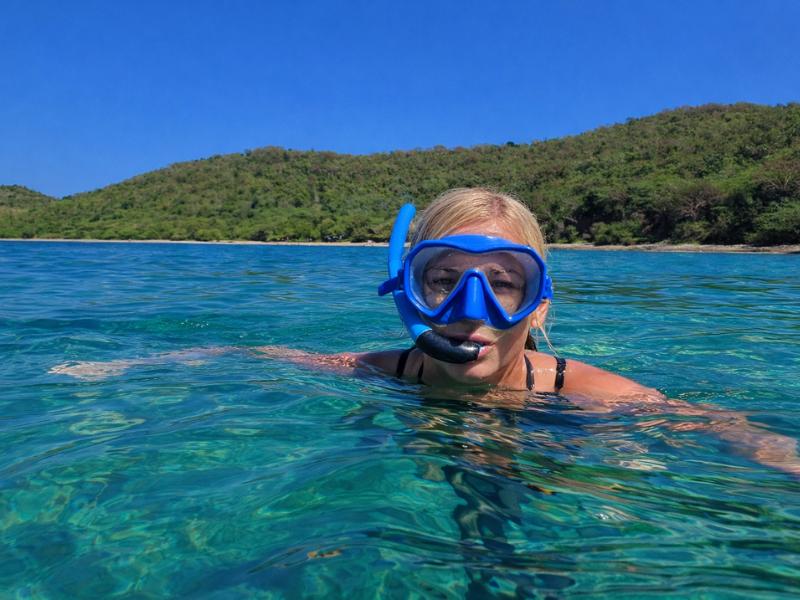
Ferry tickets, island transport, guided Tamarindo shore snorkeling, gear, snacks and Flamenco entry. Lunch extra. Explore Culebra Snorkel with Turtles & Flamenco Beach Adventure by Ferry
Culebra has six beaches worth planning a visit around. Flamenco is the world-ranked sand beach with facilities. Tamarindo is the sea turtle snorkeling beach. Carlos Rosario is the best reef beach on the island. Zoni is the wide, quiet east coast beach with views of Culebrita and St. Thomas. Culebrita is the uninhabited off-island cay with tidal pools and a 19th-century lighthouse, reached by water taxi. Melones is the easiest snorkeling beach near Dewey, perfect for a sunset session. A Jeep is essential for reaching Zoni; a golf cart covers Flamenco, Tamarindo, Melones and Dewey only.
Booking Choice: Ceiba ferry terminal; return to Ceiba. Check Dates For Tamarindo And Flamenco By Ferry
Culebra Beaches: Quick Reference
| Flamenco Beach | Swimming, sand, families, photos | Full: bathrooms, kiosks, lifeguard | 2.5 miles from Dewey. Taxi $5/person. | Golf cart or taxi |
| Tamarindo Beach | Sea turtle snorkeling | None. Bring everything. | ~10 min from Dewey. Road accessible. | Golf cart or Jeep |
| Carlos Rosario Beach | Best reef snorkeling on island | None. Bring everything. | 20 min hike from Flamenco lot, or boat | Walk from Flamenco |
| Zoni Beach | Solitude, scenery, sunrise, turtle nesting | None. No shade. | ~20 min from Dewey. Unpaved road. | Jeep required |
| Culebrita | Tidal pools, lighthouse, outer reef | None. Uninhabited island. | Water taxi from Dewey (~15 min) | Water taxi ($50-$70/person RT) |
| Melones Beach | Easy snorkeling, sunsets, near Dewey | None. Dewey 5 min away. | <1 mile from ferry dock. Road accessible. | Golf cart or short walk |
Data verified July 2026.
Why Are Culebra’s Beaches Different From the Rest of the Caribbean?
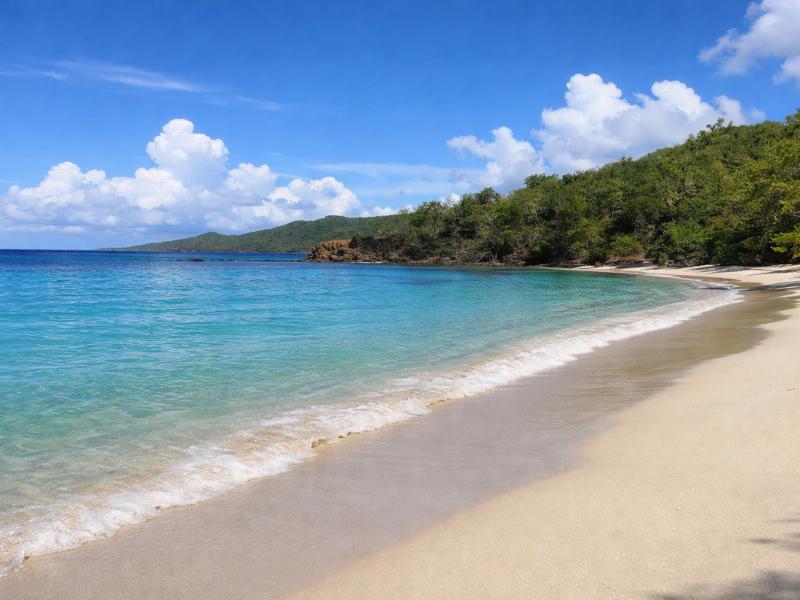
Culebra’s beaches are different because the conditions that usually degrade Caribbean beaches either do not exist here or have been actively prevented. No river runoff clouds the water. No large resort development sits behind the sand. No cruise ship pier delivers thousands of visitors daily. The Culebra National Wildlife Refuge, one of the oldest in the United States, protects the land around most of the island’s beaches. What you find at Culebra’s beaches is what most Caribbean beaches looked like before the mid-20th century tourism infrastructure arrived.
The coral island factor explains the water clarity that every first-time visitor comments on. Culebra sits on its own offshore platform with no rivers draining agricultural land into the surrounding sea. Mainland Puerto Rico’s beaches receive constant freshwater input carrying sediment and nutrients that feed algae and cloud the water column. Culebra’s water has no such input. The result is the kind of visibility that makes photographs of the island look like they have been color-corrected, even when they have not.
The development restraint is the other factor. When the US Navy left Culebra in 1975 after a successful local protest campaign, much of the island’s land was transferred to the US Fish and Wildlife Service and designated the Culebra National Wildlife Refuge. This transfer effectively prevented the hotel and resort development that transformed Vieques’s flat southeastern coast and the Puerto Rico mainland’s beach zones. Today there are no chain hotels on Culebra, no beach resorts visible from the water, and no developed seafront strip. The beaches look the way they do because of deliberate protection that has lasted for fifty years.
The beaches are not all the same. Culebra has distinct beach personalities that serve different types of visitors on different types of days. Understanding which beach does what is the difference between a good trip and one of those trips people describe for years.
Culebra doesn’t get the attention it deserves compared to the main island. Here’s a full Culebra travel guide so you know exactly what to expect before you make the trip.
Flamenco Beach: The World-Class Sand Beach
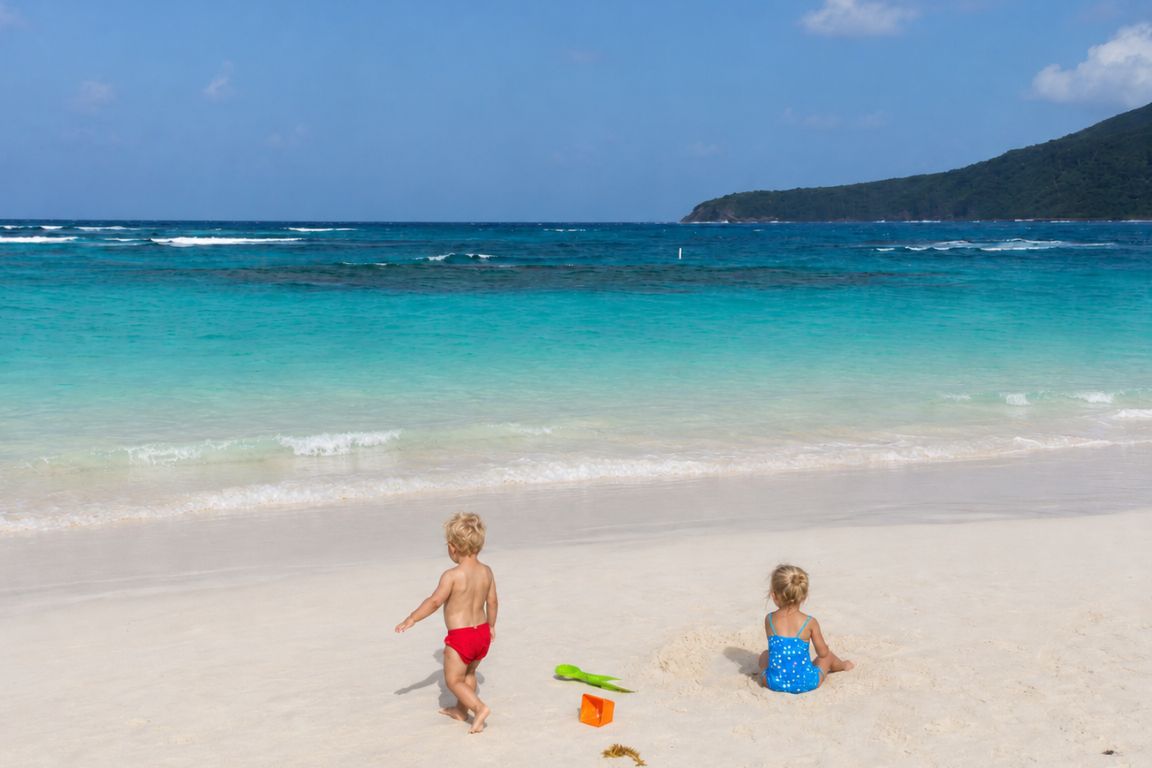
Flamenco Beach is a one-mile horseshoe bay on Culebra’s northwest shore with powdery white sand, reef-protected water that stays calm almost year-round, and a Blue Flag certification that reflects actual measurable standards. It is the first beach for every first-time visitor and, for many travelers, the reason they came to Culebra at all. Entry costs $2 per person. Parking costs $5 per vehicle. The gate opens at 7 AM and closes at 5:30 PM.
The beach earns its global ranking because it delivers what it promises without qualification. The sand is genuinely fine and white. The water color shifts from pale glass in the shallows to deep turquoise at the reef line in a way that photographs attempt and rarely capture accurately. A horseshoe of green hills frames the bay behind the beach with no resort towers, no parking structure visible from the water, and no commercial development on the hillside. Two M4 Sherman tanks from the Navy era sit at the western end, covered in fifty years of graffiti, and function as the most photographed feature on the island.
The practical setup: facilities include bathrooms, outdoor showers, kiosks serving empanadillas and cold Medalla, chair and umbrella rentals, and a lifeguard. Arrive before 10 AM on weekends for the best shade position under the pine trees at the back of the beach. The eastern end near the rocky outcrop, the section locals call the Shark Cages, has the best reef snorkeling accessible directly from shore. The western end past the tanks is the quietest section and has the best view back along the whole length of the horseshoe.
Flamenco is also the trailhead for Carlos Rosario. The gate at the back of the parking lot leads to a 20-minute coastal trail that brings you to one of the best reef beaches on the island, almost always empty. Most visitors who know about this trail treat a Flamenco day as two beaches in one.
Not sure what makes Flamenco Beach worth the trip or how to visit without the crowds ruining it? This Flamenco Beach guide covers the best times to go, what to bring, and where to set up.
Tamarindo Beach: The Sea Turtle Beach
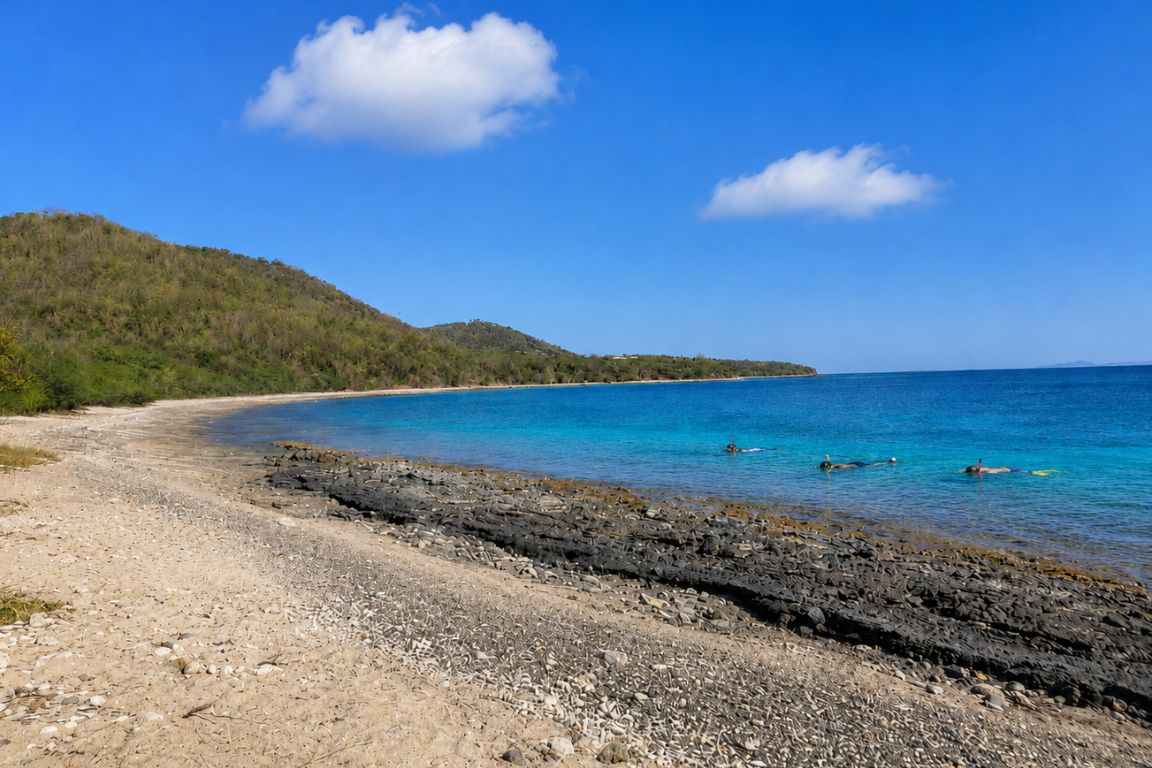
Tamarindo Beach is on Culebra’s western coast within the Luis Peña Channel Natural Reserve, about 10 minutes from Dewey by golf cart. The shore is rocky with sandy pockets, the water entry requires shoes, and there are no facilities of any kind. What Tamarindo has is a consistent population of wild green and hawksbill sea turtles grazing the sea grass beds in shallow, protected water accessible directly from shore. It is the most reliable wild turtle snorkeling encounter in Puerto Rico.
The sea grass meadows that fill Tamarindo’s shallow bay draw turtles the way a good pasture draws cows: reliably, daily, throughout the year. Swim out 30 to 60 yards from one of the sandy entry gaps along the shore to where the bottom transitions from bare sand to sea grass beds. Move slowly. Keep your fins up and your breathing even. Turtles at Tamarindo are habituated to respectful snorkelers and will often continue grazing within a few feet of a patient observer. Our guided groups typically encounter three to five individual turtles per morning session. The record we have personally witnessed is eleven, though that is exceptional.
Beyond turtles: southern stingrays cruise the sandy areas between sea grass beds, parrotfish and blue tang work the reef transition zones, and sea fans and brain coral form the structural backbone of the reef in the deeper sections toward Cayo Luis Peña across the channel. The reserve’s no-take status since 1999 has had 25 years to work; the marine life density here is noticeably higher than at comparable unprotected sites in the wider Caribbean.
Bring water shoes, reef-safe mineral sunscreen, snorkel gear, water, and food. There is nothing at Tamarindo. No bathrooms, no kiosks, no shade structure. The absence of facilities is the reason the beach stays quiet and the turtles stay comfortable.
Both are on Culebra but they offer completely different experiences. Here’s an honest comparison of Flamenco Beach vs Tamarindo Beach so you spend your time at the right one.
Carlos Rosario Beach: The Best Snorkeling Beach
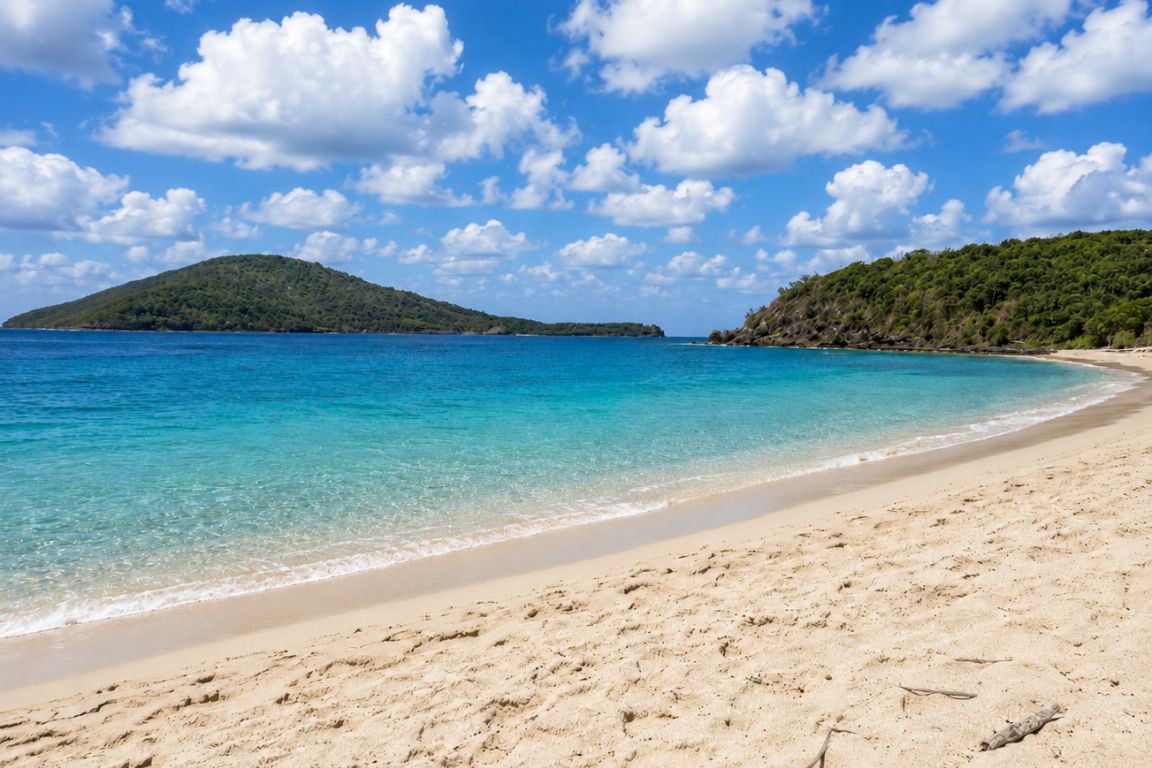
Carlos Rosario is accessible by a 20-minute trail from Flamenco Beach’s parking lot or by kayak and water taxi from Dewey. It sits within the Luis Peña Channel Natural Reserve and consistently delivers the best reef snorkeling accessible from shore on the island: brain coral, sea fans, parrotfish, moray eels, and dense fish populations in 15 to 25 feet of crystal-clear water. The only reason it is not more visited is the trail. That walk is the best thing about it.
The trail begins at the gate in the back of Flamenco’s parking lot. Follow the coastal path for about 20 minutes, passing Tamarindo Grande first before arriving at Carlos Rosario. The beach itself is small, pebbly, partially shaded by vegetation, and almost always empty. The contrast with Flamenco, where hundreds of people may be spread across the sand, is immediate and striking. You have the reef almost entirely to yourself.
The reef at 15 to 25 feet is where Carlos Rosario earns its reputation. The coral diversity here reflects decades of no-take reserve protection and active restoration work by the University of Puerto Rico, which has coral planting programs in the area. Brain coral formations the size of small cars. Sea fans in yellow and purple. Moray eels occupying crevices. Parrotfish grazing in groups. Schools of blue tang moving through the deeper water. Visibility on a calm February morning can reach 60 feet. This is the reef site that experienced snorkelers, having done Tamarindo and Flamenco, point to when asked which Culebra beach most exceeded their expectations.
Practical notes: bring everything, including water. The hike is exposed and hot in the afternoon sun; go in the morning. Water shoes are required for the rocky entry. No lifeguard. Confident swimmers only.
Not every beach on Culebra is equal when it comes to what’s underwater. Here’s a guide to the best snorkeling beaches in Culebra tours so you set up in the right spot from the start.
Zoni Beach: The Quiet East Coast Beach
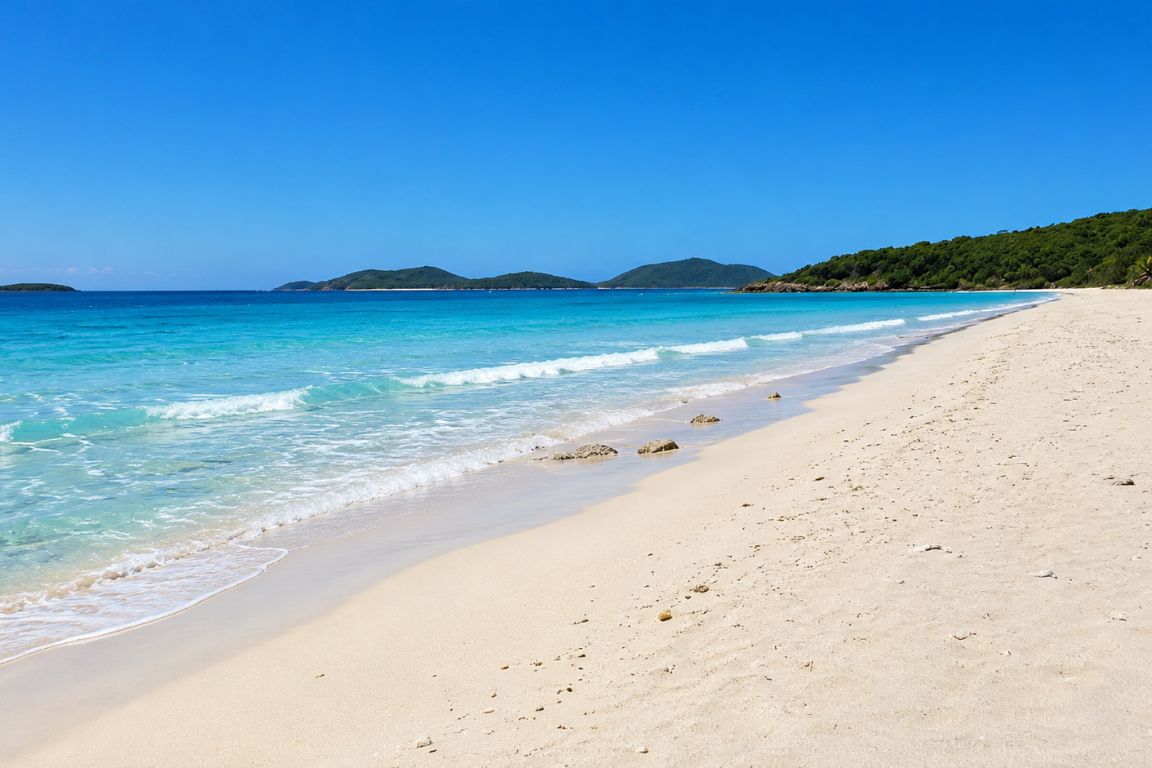
Zoni Beach is on Culebra’s northeastern coast, about 20 minutes from Dewey on an unpaved road that requires a Jeep to navigate. It is the island’s second-longest beach after Flamenco, wider and more exposed, with views of Culebrita’s lighthouse and on clear days St. Thomas on the horizon. It has no facilities, bigger waves than Flamenco, and almost nobody on it. Between April and June it is a leatherback and hawksbill turtle nesting site. The road to Zoni is the primary reason to rent a Jeep instead of a golf cart.
The drive to Zoni is part of the experience. Route 250 runs northeast from Dewey along Ensenada Honda Bay, through the US Fish and Wildlife boundary of the Culebra National Wildlife Refuge, up into the hills with panoramic views of the Spanish Virgin Islands cay system, and ends at a small parking area above the beach. The road is unpaved and rutted in sections. Most golf cart rental companies prohibit their vehicles from taking this road. A Jeep handles it without issue. The 20-minute drive through the refuge with those views justifies a Jeep rental on its own terms, independent of the beach it leads to.
Zoni itself is long, wide, and exposed to the northeast swell that Flamenco’s horseshoe blocks. In summer the water is calm enough for comfortable swimming, particularly in the central section. In winter, waves can make swimming inadvisable; check conditions before entering. The northeast orientation means Zoni catches the sunrise at a dramatic angle that photographers specifically travel there for: the light hitting the water early, Culebrita’s lighthouse silhouetted on the horizon, and the sand empty in all directions.
During turtle nesting season (April through June), leatherback and hawksbill turtles come ashore at night to lay eggs in the sand above the high-tide line. Volunteers tape off active nest sites. Do not walk on or near the marked areas. Do not use flashlights or phone lights on the beach at night during nesting season; artificial light disorients hatchlings and nesting females. The nesting activity is one of the reasons Zoni closes at 6 PM.
Trying to avoid the crowds at Flamenco Beach without sacrificing good weather? Here’s the best time to visit Culebra tours for travelers who want the island mostly to themselves.
The verified guided itineraries do not include a promised Zoni stop. Arrange independent island transport for this beach.
Culebrita: The Best Off-Island Beach
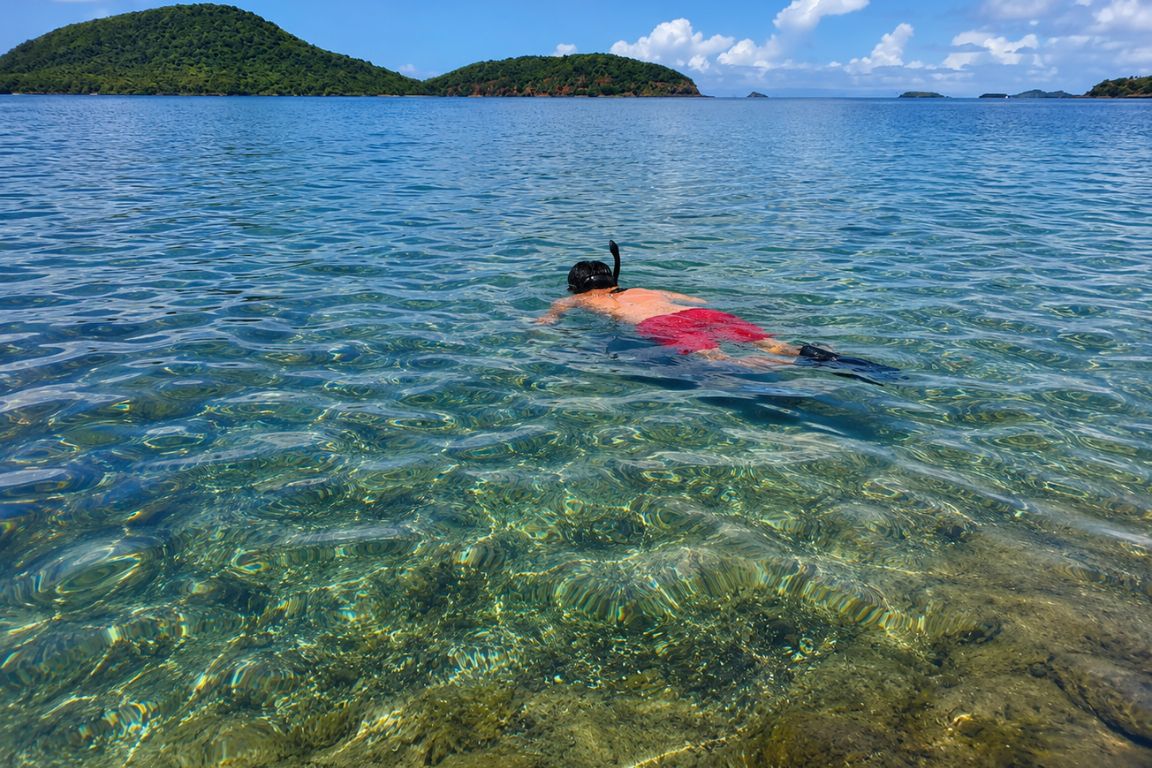
Culebrita is an uninhabited cay northeast of Culebra, reached by water taxi from Dewey in about 15 minutes for roughly $50 to $70 per person round-trip. It has six beaches, natural tidal pools called Las Jacuzzis on the northern shore, a 19th-century lighthouse on the summit with 360-degree views, and snorkeling around the cay that experienced divers rate as the best in the archipelago. It is the one Culebra experience that requires an extra step to reach and is consistently named the trip highlight by everyone who makes it.
The standard Culebrita day: take the first water taxi out around 9 AM, hike up to the lighthouse (about 25 minutes from Playa Tortuga, the main beach, on a marked trail) before the heat peaks, come back down for Las Jacuzzis at the northern tip in the late morning, and spend the afternoon at Playa Tortuga or snorkeling around the cay. The water taxi comes back at your pre-arranged pickup time; most visitors schedule 5 to 6 hours on the island. Bring everything: there is no food, no facilities, no shelter on Culebrita beyond what the island’s vegetation provides.
Las Jacuzzis are natural rock formations on the north shore where Atlantic swells push water over low reef walls into protected pools, creating a warm, turbulent soak. The experience is harder to describe than it is to enjoy. The pools are accessible via a 15-minute walk from Playa Tortuga along the northern coast trail. Go at moderate tide; at very high tide the approach trail is wet and the pools lose their Jacuzzi character as the Atlantic takes over. At very low tide the pools are shallow and calm. Mid-tide in the morning is optimal.
Snorkeling around Culebrita, particularly on the eastern and northern sides of the cay, delivers the kind of marine life density that comes from complete isolation and protection. Manta rays are seen here more regularly than at any shore-accessible site in the main island’s reserve. Turtle encounters are frequent. The reef structure is in excellent condition relative to the broader Atlantic bleaching patterns documented since 2023.
The marine life here is worth getting a guide for. Here’s the best snorkeling tours in Culebra so you spend your time above the right reef with someone who knows where to look.
Melones Beach: The Easiest Beach Near Dewey
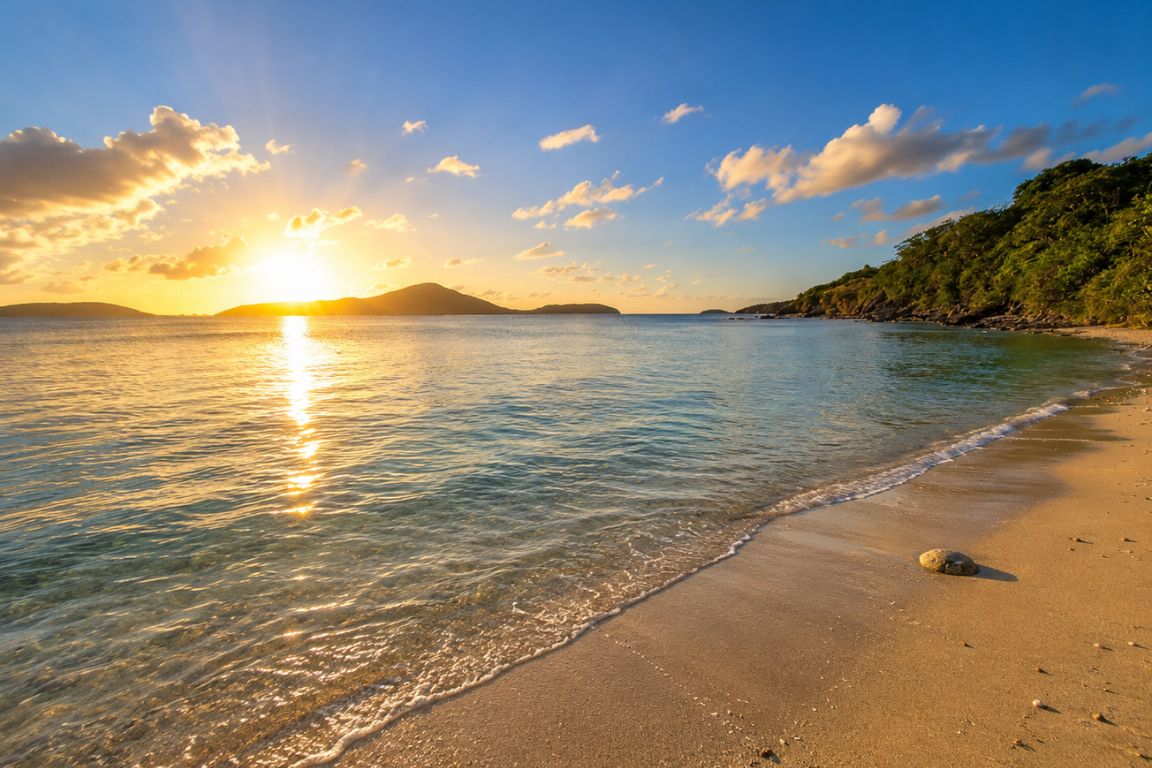
Melones Beach is less than a mile from the Dewey ferry dock, west-facing, and part of the Luis Peña Channel Natural Reserve. It has no facilities but is close enough to Dewey that food and bathrooms are five minutes away by golf cart. The reef snorkeling is immediately accessible from shore, the water faces west for the best sunsets on the island, and it is consistently quieter than Flamenco even during peak season. It is the right beach for a quick morning snorkel or a late afternoon session before dinner in Dewey.
Enter the water from behind the Melones Beach sign and swim right toward the rocky outcrop where the coral heads begin. Fish density is good: parrotfish, tangs, wrasse, and hawksbill turtles move through the area. The reserve’s no-take status protects this section as much as Tamarindo and Carlos Rosario, and the effect on marine life behavior is the same: fish are larger, less wary, and more abundant than at comparable unprotected sites.
The sunset at Melones is legitimately one of the best on the island. The west-facing exposure and the silhouette of Cayo Luis Peña across the channel produce a sunset view that the Dinghy Dock restaurant in Dewey has been leveraging for decades. A Melones snorkel session that ends around 5:30 PM, followed by the five-minute golf cart ride to Dinghy Dock for pain killers (the drink, a Culebra institution) and a seafood dinner, is a combination that experienced Culebra visitors return to on every trip.
Which Culebra Beaches Our Groups Visit Most
Across 15,400+ travelers guided through Culebra since 2014, visit patterns by beach are consistent with what each beach delivers.
| Flamenco Beach | 98% | 61% | “Better than any photo I had seen.” |
| Tamarindo Beach | 74% | 58% | “The turtles made the whole trip.” |
| Carlos Rosario | 52% | 71% | “Highest rated beach by groups who visit. The reef is exceptional.” |
| Zoni Beach | 38% | 64% | “I had no idea this existed. Completely empty.” |
| Culebrita | 29% | 84% | “The best single thing we did in Puerto Rico.” |
| Melones Beach | 61% | 44% | “Perfect sunset spot. Easy and beautiful.” |
Which Culebra Beach Should You Visit First?
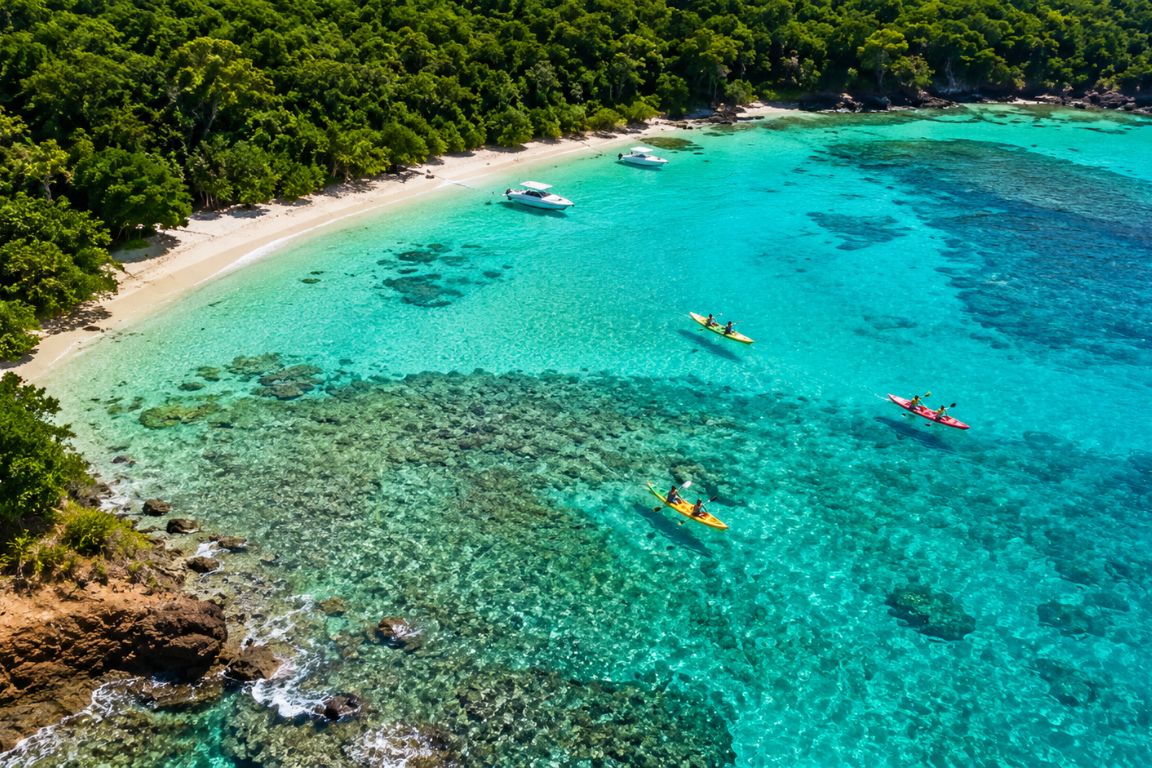 Start with Flamenco Beach on your first full day. It is the most important beach on the island for any first visit, has the only full facilities, and gives you a reference point for everything else you see. From there, add Tamarindo on the same day or the next morning, combine Carlos Rosario with a Flamenco visit since the trail connects them, go to Zoni on a Jeep day when you want to see the eastern side of the island, and plan Culebrita as a full dedicated day if your trip allows it.
The traveler who stays one night typically covers Flamenco well and misses everything else. The traveler who stays two nights adds Tamarindo and possibly Melones. Three nights unlocks Zoni, Carlos Rosario, and maybe Culebrita. Four or more nights is when the island reveals itself fully, with the space to be somewhere without rushing to the next beach on a checklist.
The Jeep question decides your access. A golf cart reaches Flamenco, Tamarindo, Melones, and Dewey. Everything east of town, including Zoni and the road through the refuge, requires a Jeep or 4WD vehicle. Most rental companies prohibit golf carts from the unpaved northern and eastern roads for good reason: the hills and ruts that make those drives memorable are the same ones that destroy golf cart suspensions. If you are staying more than one night and want to see the whole island, rent the Jeep on day one.
Still deciding how to get around the island once you’re there? This guide on the best golf cart rentals in Culebra tours gives you a straight answer on what to book and when.
Frequently Asked Questions
What is the most beautiful beach in Culebra?
Most first-time visitors say Flamenco Beach because it is the most immediately striking and the most accessible. Experienced repeat visitors often name Culebrita or Carlos Rosario. It depends entirely on whether your definition of beautiful includes “requires effort to reach.” The beaches that take work to get to consistently produce the strongest reactions.
Do you need a Jeep to visit all Culebra beaches?
Yes, for Zoni Beach specifically. The road to Zoni is unpaved and rutted, and most golf cart rental companies prohibit their vehicles from that route. A Jeep or 4WD vehicle covers the entire island. A golf cart covers Flamenco, Tamarindo, Melones, and the Dewey area only.
Which Culebra beach is best for families with young children?
Flamenco Beach. It has the calmest, shallowest water on the island, a lifeguard on duty, bathrooms, shade trees, and food kiosks. The far right end of the horseshoe bay is particularly calm and suitable for toddlers. No other Culebra beach combines safe water with full facilities.
How do you get to Culebrita from Culebra?
By water taxi from Dewey, about 15 minutes each way. Round-trip costs roughly $50 to $70 per person. You set your own return time with the driver. There is no scheduled ferry service to Culebrita. Book your water taxi the day before in peak season; drivers fill quickly for the popular morning departures.
What beach in Culebra has the best snorkeling?
Carlos Rosario for reef diversity and depth. Tamarindo for sea turtles. Culebrita for the outer cay experience with manta rays and dense reef structure. Melones for easy access near town with quality coral. Flamenco’s eastern reef (the Shark Cages) for beginners who want to stay at the main beach.
Written by Camila Elena Ramirez
Puerto Rican tour guide since 2014 · Founder, Culebra Tours
Camila has guided over 15,400 travelers through Culebra and the Spanish Virgin Islands since founding the agency.